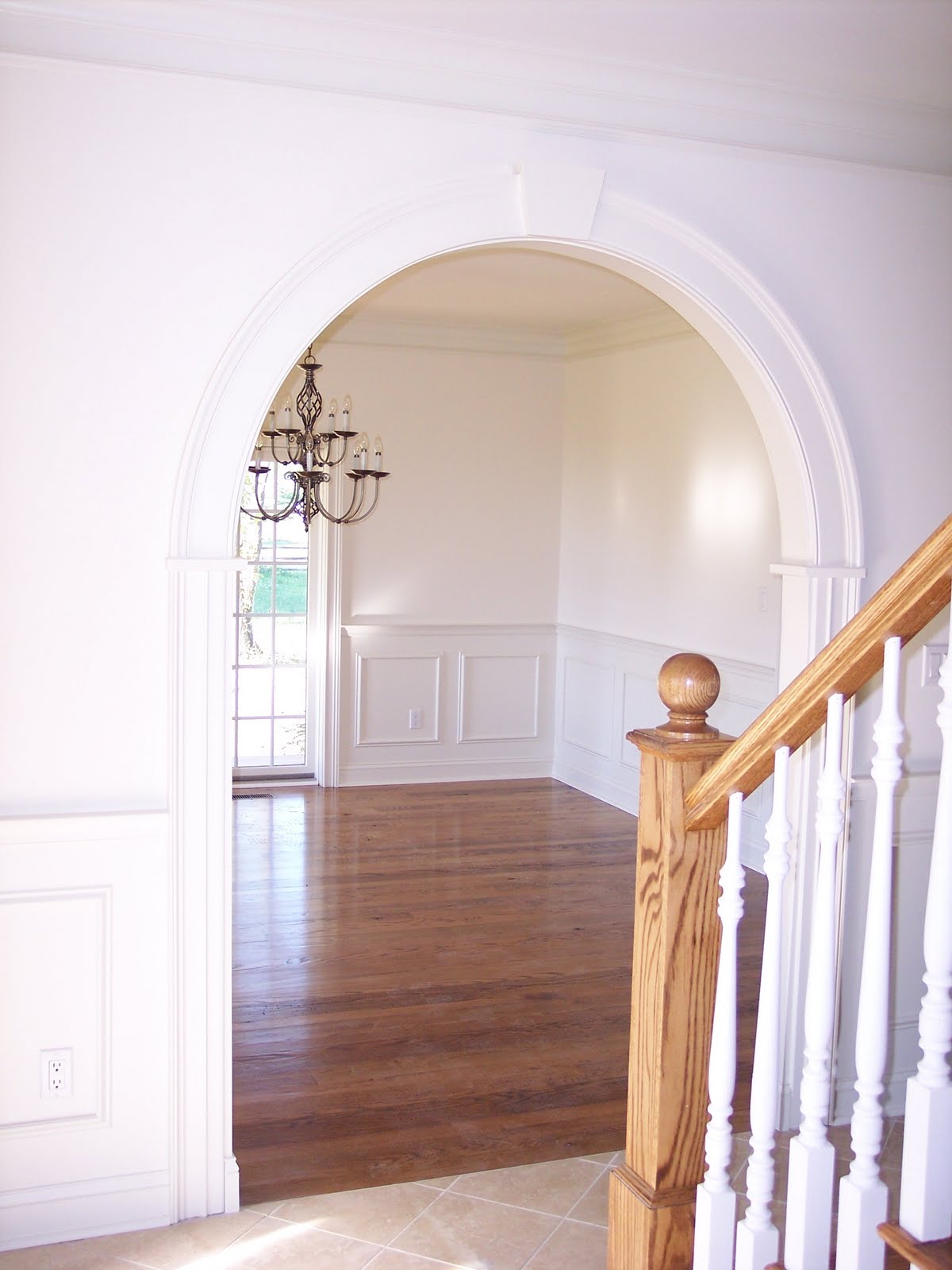
Tuesday, July 31, 2012

Repair tips for hardwood floors - The Seattle Times

Repair tips for hardwood floors | Home & Garden | The Seattle Times


Q: My 91-year-young mother remains in the house she's lived in her entire married life. Though termite prevention has been used, I am noticing soft spots in some sections of the floor that normally are covered by furniture. Is there a way to perhaps install new flooring here and there as opposed to tearing up everything? Change does not make her happy. Her rationale is that she sees no reason to start a project that may not be finished before she is no longer in her home.
A: I'm assuming you are talking about hardwood floors, because replacing carpet or vinyl would not require "tearing up everything." Yes, the floors can be repaired without major renovation. Besides, replacing just a few boards here or there would show up as an unsightly patch. Matching the existing hardwood floor's color and texture would be almost impossible. In extreme cases, hardwood flooring is removed from a closet or pantry and used to make repairs in the living areas, and then the closet floors are covered with any type of flooring available.
If the surface of the hardwood is in good condition, the floors can be stabilized and supported by adding bracing under the hardwood. From the crawl space or basement, find the areas in need of repair.
Measure the areas to be repaired in between the floor joists and cut a piece or pieces of half-inch plywood to support the flooring above. Cut two 2-by-4 boards the same length as each piece of plywood...

Wednesday, July 18, 2012

Estimated $100 Billion in manufacturing coming back to the U.S. within 10 years.


Wood does 180: US manufacturers set sights on domestics

The hardwood category came to blows in the last couple of years as overseas competition, namely from China, became fierce, and both U.S. manufacturers and importers fought for their businesses.

At the same time, several manufacturers redirected their efforts to manufacture product here in the States that was previously produced overseas. Both Somerset and Mullican are now producing engineered hardwoods and Home Legend acquired domestic maker Baker’s Creek, which they now emphasize and market as a key brand.

In order to shift its manufacturing capabilities to the States, Mullican will invest $12 million over the next three years in its new 309,000 square-foot facility, and will add between 70 and 80 additional jobs, according to the company.

This move to domestic manufacturing or “onshoring” is so expansive that industry executives said that they believe $100 billion in manufacturing will be brought back to the U.S. over the next decade. This shift is also believed to lower the nation’s unemployment rate by 1.5 percent by creating hundreds of thousands of jobs, according to Mullican’s president, Neil Poland.

Dan Natkin, director of wood business at Mannington, said the United States is ripe for an increase in manufacturing because of its great supply of raw materials and transportation logistics. Mannington is a champion of domestically made products, with about 85 percent or more of its products made here in the United States, according to the company. “We have a long standing, well routed relationship with domestic production. It’s the right thing to do; we’d rather direct our destiny,” said Natkin.

> Read the complete article here at Floor Covering Weekly

Friday, October 15, 2010

Home Sales Continue to Improve

According to the latest report by the National Association of Home Builders, pending home sales are continuing to improve.

The Pending Home Sales Index (PHSI) by the National Association of Realtors® (NAR) indicated that contracts signed on existing homes gained 4.3% in August, following a 4.5% rise in July. This signals that the payback period associated with the expiration of the home buyer tax credit is now behind us.

The upturn in the PHSI was consistent across all regions except the Northeast, with solid growth in the South (6.7%) and West (6.4%) and a modest gain in the Midwest (2.1%). The Northeast declined 2.9%.

The PHSI is based on contracts signed, while existing home sales are based on closings. The NAR advises that existing home sales typically lag the PHSI by one to two months.

The latest data are “consistent with a gradual improvement in home sales in the coming months,” according to Lawrence Yun, NAR chief economist, but the “pace of home sales recovery still depends more on job creation and the accompanying rise in consumer confidence.”

At present, consumer confidence is glum, with both the Conference Board Consumer Confidence Index and the University of Michigan Consumer Sentiment index down in September. Despite a modest gain in August, the indexes has been trending noticeably downward since the middle of second quarter because of consumers’ concerns about the economy and the weak job market.

With the economy and employment expected to improve in 2011 and 2012, NAHB expects consumer confidence to improve and housing demand to gather some positive momentum.

By the fourth quarter of 2012, NAHB anticipates that existing home sales will return to normal, pre-recession levels. The four-week moving average of applications for mortgages already has risen over the last six weeks for purchase-only conventional mortgages, and for five of the last six weeks for all purchase-only mortgages.

Wednesday, October 13, 2010

2011: International Year of Forests

Highlighted by Floor Covering Weekly:

The United Nations General Assembly has named 2011 the International Year of Forests in order to raise awareness and strengthen the sustainable forest management, conservation and sustainable development of all types of forests. To gain support for the movement, the U.N. requested that private sector, governments and non-government organizations attempt to raise public awareness of progressive forest management as a key element in building a sustainable global society.

“The Lacey Act Amendments in the U.S., FLEGT in the EU and other legislation around the world are focused on legal harvesting of trees, but a serious issue of total forest destruction through mismanagement of forests remains a growing threat to the planet and the lives and livelihood of many hundreds of millions of people,” said Jim Gould, president of the Floor Covering Institute (FCI). “Each year millions of acres of forests are lost to deforestation. Thus, the International Year of Forests is designed to raise awareness and promote global action to sustainably manage, conserve and develop all types of forests.”

Gould told FCW that the U.N. chose 2011 to focus on the forest because all of the attention given to sustainability and the environment would not be complete without an emphasis on how important the forest is for protecting and providing resources. “The U.N. feels a sense of urgency to bring attention to the important role that forests play in our lives — the multitude of products and sources of income derived from them as we well know in the flooring industry, but also they are the home to 90 percent of the world’s life forms, they protect watersheds and of course they play a huge role in carbon sequestration. Sustainable forestry practices must be employed so that we continue to receive these benefits,” he said.

Gould and FCI are behind the promotion and will act as an ambassador to the U.N. in delivering the message to the flooring industry. “The U.N. has approved FCI to bring attention to the International Year of the Forests and we will bring the message to our industry. We are building an educational program at the International Wood Flooring Forum in Shanghai and will promote the International Year of Forests at Domotex Asia/ChinaFloor in Shanghai,” he said.

Wednesday, October 6, 2010

What a Difference the Finish Makes?

You'll spend quite a bit of time deciding what kind of hardwood flooring to install in your home. But it's about more than just the species of wood, the finish is just as important and will affect your flooring's final appearance. We're ready to discuss all of the options with.

The type of finish on a wood floor makes a difference on looks, durability and wear. From traditional oak hardwood floors to exotics such as Brazilian walnut (also known as ipe) and Bolivian rosewood, selecting a floor finish to best suit the type of wood is critical to protect it.

More and more varieties of hardwood flooring are coming from the manufacturer already finished, which typically eliminates the need for any sealer or finish after installation. Manufacturers provide information on the factory prefinish they apply and will give recommendations for any additional finishing after installation.

Most exotic wood floors are manufactured as solid floors, while some varieties are available as an engineered floor. Cork and other exotics are becoming increasingly popular as prefinished products with an aluminum oxide finish or UV-cured acrylic finish.

Also increasing in popularity and use, bamboo comes in a natural, yellow color or medium-brown tone, with grain patterns that run either horizontally or vertically. It is unusual to see it stained a dark color, but not unheard of. Bamboo can be easily sanded and finished successfully. It is not as easy to stain because of its hardness rating, which is similar to maple—harder than oak.


Most unfinished hardwood floors require one coat of sealer and at least two coats of protectant finishing. Sealing is very important, especially under polyurethane finishes, because it seals the wood and helps to prevent panelization, or the separation of groups of boards from others or from the rest of the floor. Stain can sometimes be used as the substitute for the initial seal coat, depending on the look you want, but manufacturer's recommendations should be followed. Staining most exotics, even maple, because of their cell structures and hardness, will usually give you poor results.


Beyond the application of stain and sealer, it's essential to apply a water- or oil-based finish to protect the wood. The choice depends on the type of wood, desired results, color and grain pattern. Differences in the polyurethane finishes:


Water-based

  • Fast drying, need to be applied with focus to avoid brush marks
  • They let the natural color of the wood come through. Sometimes water-based finishes wash out rich, dark hues.
  • Many flooring professionals consider water-based finishes to be superior to oil-based finishes.
  • Often recommended for many types of exotic woods.
  • Because they are water-based, they are considered environmentally-friendly.

Oil-based

  • Add more color and depth to most woods giving an amber or yellow effect over light woods while darkening the hue of stained and dark woods.
  • They are more forgiving than water-based when application is uneven.
  • The drying time is 12 to 24 hours.
  • Enhance the wood of species such as walnut and red birch.
  • Hand-rubbed finishes occasionally are used on special wood. Tung oil is an alternative for rustic or reclaimed-wood floors to get a natural look.

Satin finishes are an overwhelmingly popular choice. A low sheen offers a natural look that shows less wear. High gloss will show wear easily - think basketball court or bowling alley.

Following manufacturer's recommendations and your flooring professional's advice will get your the best results. Call us today for a Free Quote!

Friday, September 24, 2010

What about the forests?

I came across an old blog today that had an interesting summary of the National Forests and the effects of harvesting for manufacturing. I've always known about these numbers but to see it in black and white was very encouraging. I thought you might like to see for yourself...

United States Forestry facts:

FACT: Forests cover over one third of all land in the United States.
FACT: Over 72% of hardwood forests in the United States are privately owned.
FACT: Over 70% of forest land that was here in 1600 is still forest…over 737 million acres!
FACT: In 1952 the volume of timberlands in the US was 184,090 (in million cubic feet)
FACT: In 1999 the volume increased to 335,722 (million cubic feet) an increase of 82.4%
FACT: Forests in the US are increasing at an average rate of 5.27 BILLION cubic feet per year AFTER mortality and harvesting!

Total growth…12.22 Billion cubic feet
Mortality……..<2.50> Billion cubic feet
Harvest……….<4.45> Billion cubic feet

FACT: Harvest has over doubled (102%) since 1952 and we are STILL showing growth in our forests.
FACT: There is 82% more growing timber in the US now then in 1952
FACT: Over 1.5 billion trees are planted in the US every year…that’s 4.1 million seedlings per day!
FACT: Each year 6 trees are planted for every 1 that is harvested.
FACT: 43,700 companies in the US employ 1.75 million workers.
FACT: Wood is recyclable, biodegradable and durable, lasting often for centuries and can be returned to the earth at anytime with a benefit to the earth!
FACT: Wood is renewable while stone, iron or coal once used is gone forever.
FACT: Wood makes up 47% of all industrial raw materials used in the US yet require only 4% of the energy used to produce these materials!
FACT: Steel structure materials require 3 times as much energy and 16 times as much clean water to produce then wood.
FACT: As an insulator, wood is 16 times more efficient as concrete, 415 times as efficient as steel and over 2000 times as efficient as aluminum!


There is also a lot of great info over here about Reforestation and why it is so important, which you may or may not realize. It's good to know that what we are a part of, is good for our environment!


Friday, September 10, 2010

Maybe all you need is some Refinishing

If the beauty of your existing hardwood floor is marred by scratches and dents, refinishing could restore its original luster. The process requires sanding a thin layer off the top of the floor, staining it again, and applying a new protective finish.

The Applegate refinishing crew is experienced at stripping, sanding, staining, painting, and polyurethane topcoating. If you opt for a natural finish, we'll apply no stain, but one coat of a polyurethane sealer and three coats of polyurethane. If you'd prefer a stain, we'll apply the stain plus three coats of polyurethane.

If you have only minor damage or a dull-looking floor, we might suggest a screen and coat instead of complete refinishing. This method involves only light sanding and one coat of polyurethane.

Here are some helpful guidelines on what you can expect if you choose to have your floors refinished:

When Should I Think about Refinishing my Wood Floors?

Most homeowners will schedule a complete refinish when worn or bare spots begin to appear, or scratching has become too much to handle. Sometimes the homeowner simply wants a color change when they consider refinishing or some just may want to change the gloss of the finish, or you can also change from a waxed finish to a lower maintenance polyurethane finish.

When to have the work done? Simply depends on you . While most people can live with the everyday abuse wood floors get as scratches, dings, and dents lead to adding character, others prefer a sleek contemporary look in which you would require refinishing every five years to maintain. It is all about the homeowner's preference.

What Happens During Refinishing?

Some refinishers have invested in dust extraction systems. Others may just have a bag attached to their sanding equipment. Dustless systems eliminate an enormous amount of dust and old finish materials that would otherwise linger in your home for possibly months after refinishing. Dust can find it's way anywhere; into kitchen cabinets, heating and cooling system vents...everywhere unless you protect everything during the work. Dust can be minimized if the refinisher tapes off rooms, you remove drapes, and maybe even call in that cleaning crew once the work is done. Poor dust control may also have an effect on the final appearance, not to mention everyday health.

Applegate does offer a highly advanced dustless sanding system that virtually eliminates the wood dust. The filters remove all the dust down to below 1 micron yielding no dust emissions from the system. No plastic sheets or masking is required and there is minimal cleanup.

What Happens after the Job is Done? When Can I Move Furniture Back In?

Water based finishes will take the least amount of time to dry and cure. Conditions can vary and depends on relative humidity within the home or conditions outside if you want to speed up the odor removal with an open house. We'll let you know when the best time to replace furniture is, as well as when and if you are able to use area rugs.

How Long Does It Take?

If the rooms are ready with furniture, drapes and any wall hangings removed, finishing will usually take 3 days.


If you'd like to spruce up your floors, Refinishing may be all you need. Call us now for a Free Estimate to see what we can do for you!


Wednesday, September 1, 2010

Where to start when deciding on wood flooring

There are several things to keep in mind when selecting a wood floor. By considering the questions below, you can ensure that your purchase will meet your needs and provide years of beauty and durability. We are always available to help you make a great selection.

  1. Is your Project?
    • Residential
    • Commercial
    • Institutional
The kind of project you have will dictate the choices available to you. Installation methods and warranties will differ for residential versus commercial or institutional. However, many products are available in both classifications.


2. On what grade (elevation) will the flooring be installed?

  • On-grade or on the ground floor
  • Above-grade, or on an upper floor
  • Below-grade, such as a basement

    If you are installing your floor below grade, be sure to use an engineered or laminate product. Solid wood floors normally would not be used below grade because they are not as tolerant of moisture.

3. What subfloor will you be installing on?
  • Concrete slab
  • Plywood
  • Existing floor such as vinyl or wood

    A solid wood floor is not a good choice over a concrete slab since it should be nailed or stapled to the subfloor. Most of time, wood flooring will be installed over a plywood subfloor. Concrete slab is most common in below grade levels, ie basements.What installation method will you use?

4. What installation method will you use?
  • Nail or Staple
  • Glue
  • Floating
For Glued or Floating installations your best choice is an engineered or laminate floor. You'll get the best results from your flooring if you use the recommended installation method. Solid wood flooring will most often be nailed down.

5. What color tones do you prefer?
  • Dark
  • Medium
  • Light
  • Reddish
  • Golden
6. Do you have a species of wood in mind?
  • White oak
  • Red oak
  • American cherry
  • Brazilian cherry
  • Santos mahogany
  • Other
Sometimes the species of wood will limit the stain options available to you. To have more options available, consider different types of species.

7. What width of boards do you prefer?
  • Strips from 1 1/2 to 2 1/4 inches
  • Planks from 3 to 5 inches
  • Planks from 5 to 8 inches
  • Parquet
  • Other
Something to consider regarding board widths is the size of the room or space you are installing the wood flooring in. Wide board tend to open up the space more than smaller widths.
You will get the best results from your selection if you make an informed and educated decision and use this outline to help you get there. Applegate Wood Floors is always available to assist you with your decision. Call us today for a Free Estimate!

Featured Project:


Monday, August 16, 2010

Press Release from NWFA: NWFA Introduces Consumer Labeling Program

Great news for Consumers! The National Wood Flooring Association has developed an Accepted Product program so that consumers are able to determine and compare performance standards of wood flooring products.

The NWFA has introduced the Accepted Product seal program, which was developed to help consumers identify wood flooring products that meet established minimum standards for performance. Standards are determined for six product categories, each with its own testing requirements and performance criteria. The product categories are abrasives, adhesives, engineered flooring, fasteners, finishes/stains/sealers and underlayments; all evaluations are conducted by third-party testers using specific ASTM/ANSI testing requirements. Participation in the program is voluntary, and NWFA manufacturer members can submit test results to the NWFA for review. If the product is approved, the member must submit an annual licensing fee for use of the NWFA Accepted Product seal, which can be displayed on the product or in literature so consumers can identify it as meeting established industry standards. The seal may be carried for three years, after which new test results must be submitted.